

Fertility treatment 2024: trends and figures
Official UK statistics for IVF and DI treatment, storage, and donation
Published: June 2026
Download the underlying dataset as Excel Worksheet
Table of contents
- Main points
- Section 1: Over 21,000 babies were born from IVF in 2024
- Section 2: IVF birth rates have increased overall but remain lower for Black and Asian patients
- Section 3: Number of IVF patients tripled in 30 years
- Section 4: Multiple birth rates remain one of the lowest in the world
- Section 5: Number of new egg and sperm donors have remained similar in recent years
- Section 6: Use of DI is declining, particularly among female same-sex couples and single patients
- Section 7: NHS funded IVF cycles declined from 35% in 2019 to 28% in 2024
- About our data
Main points
- The number of patients undergoing in vitro fertilisation (IVF) has almost tripled over the last 30 years, from around 19,000 in the early 1990s to 53,000 in 2024.
- Frozen embryo transfers have increased in use, now accounting for almost half (48%) of all IVF cycles carried out in 2024.
- IVF births have doubled from less than 1.5% of all United Kingdom (UK) births in 2004 to over 3% in 2024.
- 81% of IVF births were from treatment using a patient’s own eggs and partner sperm. 1 in 5 births were from treatments using donor eggs, sperm, or embryos, accounting for 1 in 137 of all UK births.
- The average IVF birth rate per embryo transferred was 30% in 2024. Birth rates were highest for patients aged 18-34 at 38%, compared with 8% for patients aged 43-44.
- Although average IVF birth rates have increased over time, disparities remain, with Black and Asian patients having lower birth rates compared to White patients and patients from a Mixed ethnic background.
- The proportion of National Health Service (NHS) funded IVF cycles declined from 35% in 2019 to 28% in 2024 in the UK, and was lowest in England (25%).
1. Over 21,000 babies were born from IVF in 2024
In 2024, around 53,000 patients had IVFI at licensed fertility clinics in the UK. The number of babies born from IVF has more than doubled in the last 20 years, from 10,200 in 2004 to around 21,400 babies born in 2024.
IVF births are making up a higher proportion of all UK births over timeII, more than doubling from under 1.4% in 2004 to 3.2% in 2024. This means around 1 in 31 UK births in 2024 were from IVF – roughly one child in every classroom – compared to around 1 in 65 in 2004.
Most babies born from IVF were from treatments using a patient’s own eggs and their partner’s sperm (81%, Figure 1). A further 13% of the remaining births came from IVF using a patient’s own eggs and donor sperm, followed by those using donor eggs and partner sperm (5%). Just 1% of IVF births were from treatments using donor embryos or embryos created with donor eggs and donor sperm.
In 2024, 2,660 patients had donor insemination (DI). DI births accounted for around 760 babies born in the UK – 0.1% of all UK births.
Births from IVF using donor eggs, sperm or embryos and DI accounted for around 1 in 137 (0.7%) of all UK births in 2024.
Figure 1. 81% of all IVF births were from treatments using patients’ eggs and partner sperm
Number of IVF births in the UK by egg and sperm source, 2014-24
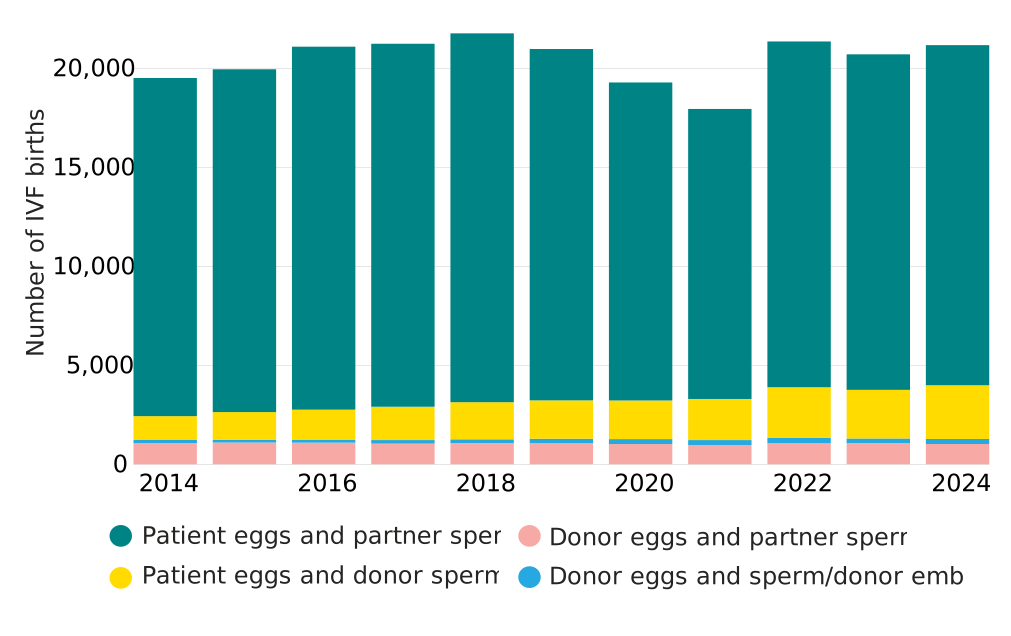
Note figure 1: The IVF live birth data for 2020-21 and 2024 is preliminary and has not been validated. The drop in 2020 and 2021 is due to the decreased treatment activities in 2020 during the COVID-19 pandemic. Year refers to the year of birth, rather than year of treatment. All births submitted to the HFEA as a result of fertility treatment undertaken in the UK licensed clinics are included regardless of patients’ residence and may include births that occurred outside of the UK. Surrogacy cycles have been excluded.
Download the underlying data for Figure 1 as Excel Worksheet
The average patient age when starting IVF decreased slightly to 34.8, after reaching its highest, at over 35.1 years old, in 2021. This varied by family type and ethnicity. Single patients started IVF at 35.4 compared to 34.8 for opposite-sex couples and 33.4 for female same-sex couples.
White and Asian patients started IVF treatment earlier than patients from other ethnic backgrounds (34.7 and 34.9 respectively). The average age of Black patients starting IVF decreased from 36.8 in 2019 to 35.5 in 2024, whereas the average age of patients from a Mixed ethnic background increased from 34.9 to 35.7.
Generally, patients starting DI treatment are younger than those starting IVF. The average age for DI has decreased from 34.1 in 2014 to 33.3 in 2024.
2. IVF birth rates have increased overall but remain lower for Black and Asian patients
The average birth rate per embryo transferred from IVF using fresh and frozen embryo transfers with patient’s eggs increased from 20% in 2014 to 30% in 2024 (Figure 2)III.
Patients aged 18-34 had the highest birth rate per embryo transferred at 38% in 2024 and patients aged 43-44 had the lowest at 8%.
Outcomes vary by family type and ethnicity1-2. In 2022-24, the average birth rate per embryo transferred was between 5-6 percentage points lower for Asian (30%) and Black (30%) patients aged 18-37, compared to White patients (36%) and patients from a Mixed ethnic background (35%). Reasons for these variations are not explained by our data but may relate to other differences across ethnicities, ranging from age at treatment, reproductive and underlying general health conditions to social, economic and other factors3.
Patients aged 18-37 in female same-sex couples had the highest birth rate at 42% followed by single patients at 39% and patients in opposite-sex couples at 35%.
See our Ethnic diversity in fertility treatment and Family formations in fertility treatment 2022 reports, or our HFEA dashboard, for further information by demographics.
Birth rates from patients undergoing fresh and frozen embryo transfers are not directly comparable. This may be because patients having frozen embryo transfers are more likely to have had good quality embryos suitable for freezing and future transfer.
Figure 2. IVF birth rates have increased since 2014
Average fresh and frozen embryo transfer IVF birth rate per embryo transferred using patient eggs by age, 1991-2024
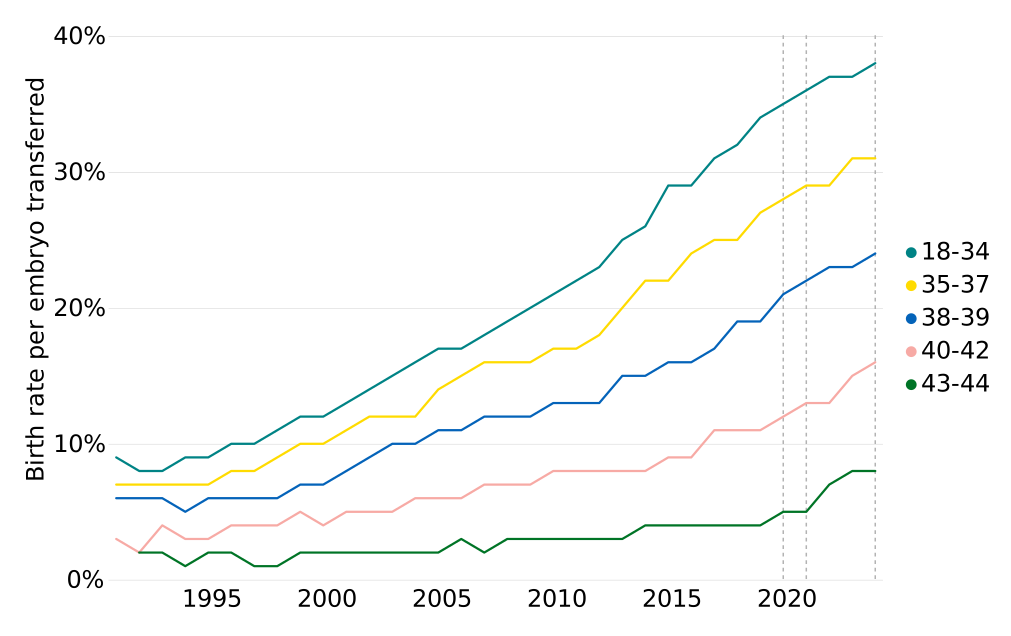
Note figure 2: Birth rates for 2020-21 and 2024 are preliminary and have not been validated (grey dashed line). This data includes IVF treatment cycles using patient eggs started with the intention of immediate treatment, instead of storing eggs or embryos for future use. Treatments PGT-A/M/SR, donor eggs or surrogacy, and treatments in which a pregnancy was recorded but no birth outcome was recorded have been excluded. Patient age in this figure for frozen embryo transfers uses patient age at egg collection. See Quality and Methodology report. Differences between patient populations for fresh and frozen transfers mean that birth rates for these populations are not comparable. IVF birth rates from 2020, 2021 and 2024 are likely to be affected by missing outcome data and may change following data validation.
Download the underlying data for Figure 2 as Excel Worksheet
3. Number of IVF patients tripled over 30 years
In 2024, 64,000 patients underwent over 100,000 treatment and freezing cycles at HFEA-licensed clinics. The number of IVF patients has increased each year, almost tripling over a 30-year period (Figure 3).
Most activity carried out by UK clinics was IVF (76%) in 2024, with frozen embryo transfers making up an increasing proportion – rising from 24% of IVF cycles in 2014 to 48% in 2024. The increase in frozen embryo transfers is consistent with longer term trends and due in part to increased use of single embryo transfers over the last decade (see Section 4).
Egg and embryo freezing cycles made up almost 1 in 5 cycles (17%) carried out in 2024. Most were embryo freezing cycles (10%), which has increased markedly since 2014 – from 1,900 cycles to 10,450 in 2024.
The number of DI patients has decreased in recent years from around 3,000 in 2019 to around 2,660 patients in 2024 (Figure 3). DI treatments decreased as a proportion of total cycles, falling from 7% in 2014 to less than 5% in 2024, with the number of cycles falling below 5,000 for the first time since 2016. This is linked to the increased use of IVF with donor sperm instead of DI among all family types (see Section 6).
Over the last decade, the number of patients freezing eggs has increased from around 700 in 2014 to 5,580 in 2024. However, for the first time since 2020, the number of egg freezing cycles carried out has not increased between years, remaining at a similar level to 2023.
In 2024, around 1,660 egg donors underwent 2,400 donation cyclesIV. Egg donation cycles made up 2% of all cycles carried out in 2024V. On average, egg donors underwent 1.2 donation cycles in 2024VI.
The number of surrogates undergoing IVF treatment increased from 170 in 2014 to 230 in 2017, and has remained consistent at around 230-250 since then. In 2024, surrogates accounted for less than 1% of patients.
Figure 3. IVF continued to form the largest proportion of treatments in 2024
Number of patients and cycles by intended activity, 1991-2024
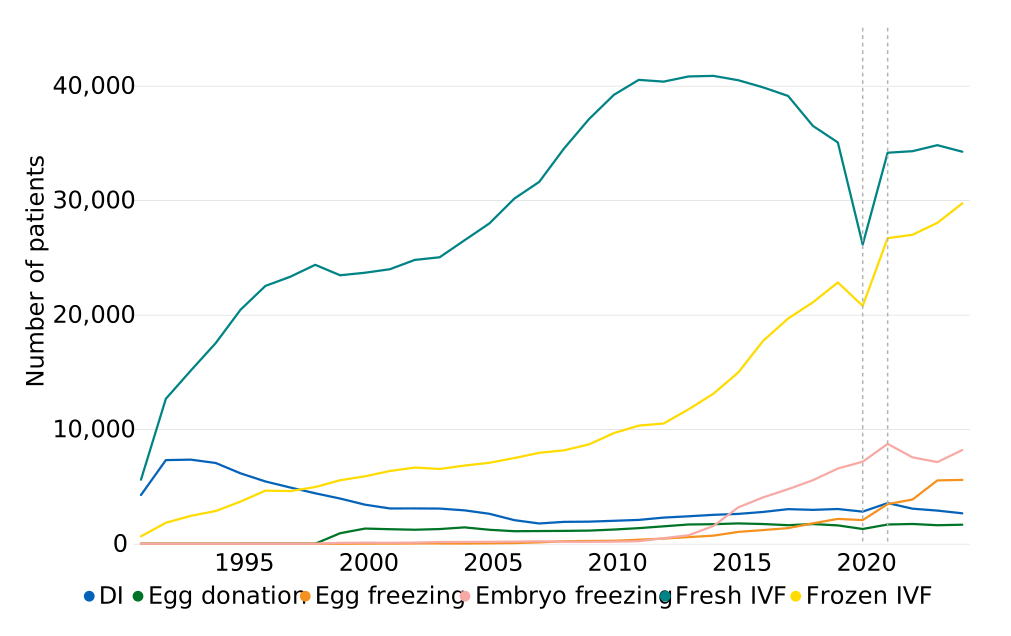
Note figure 3: The counts for 2020-21 are preliminary and have not been validated (grey dashed line). Includes only IVF and DI cycles started with the intention of having immediate treatment, instead of storing eggs or embryos for future use. Donation cycles include cycles started with the intention of donating eggs and also includes cycles where eggs or embryos were both donated and stored. Number of patients is not a distinct count in this figure. This means that if a patient underwent embryo freezing and then IVF in the same year, they would be counted in both totals.
Download the underlying data for Figure 3 as Excel Worksheet
4. Multiple birth rate remains one of the lowest in the world
Multiple births pose an increased risk of health problems for patients and their babies, such as preterm birth, pre-eclampsia, and still birth, as well as neonatal and maternal death.
The average multiple birth rate has decreased from 14.4% in 2014, to its lowest UK average of 3.2% in 2024 (Figure 4). This is among the lowest multiple birth rates in the world4-6.
Multiple births in the UK have decreased largely due to the high number of single embryo transfers (84% in 2024), which is one of the highest rates across Europe7. Importantly, birth rates have continued to rise while the multiple birth rate has fallen.
The multiple birth rate for all ethnic groups has declined over the years – see HFEA dashboard for information by ethnicity and family type.
Figure 4. Average multiple birth rate from IVF decreased to 3.2% in 2024
Average IVF multiple birth rate, 1991-2024
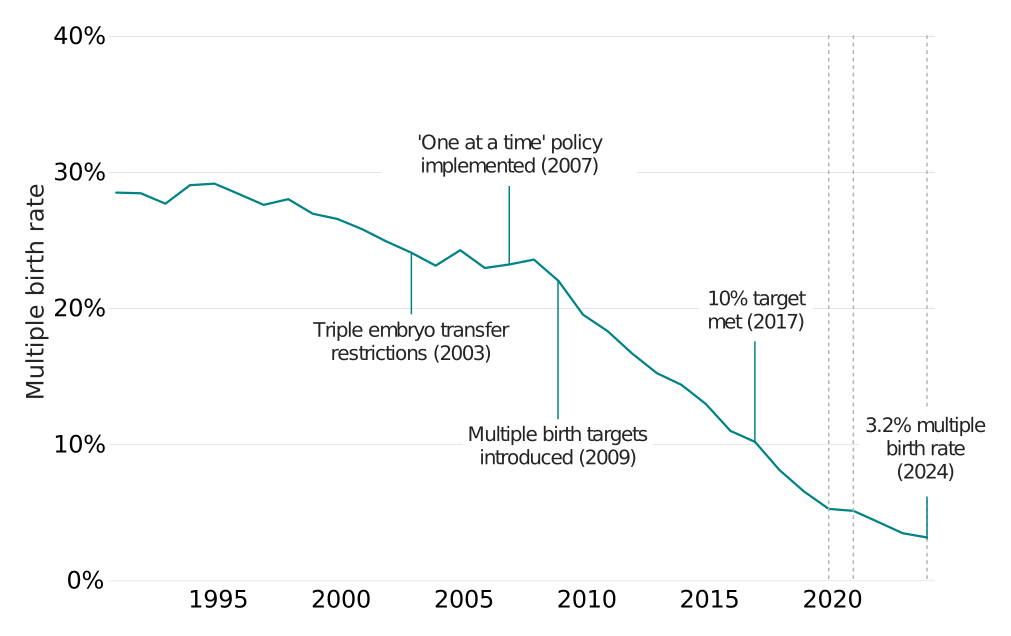
Note figure 4: Multiple birth rates for 2020-21 and 2024 are preliminary and have not been validated (grey dashed line). This data includes cycles using either patient or donor eggs and IVF treatment cycles started with the intention of immediate treatment, instead of storing eggs or embryos for future use. Treatments in which a pregnancy was recorded but no birth outcome was recorded have been excluded.
Download the underlying data for Figure 4 as Excel Worksheet
5. Number of new egg and sperm donors have remained similar in recent years
The number of new egg donors increased by 6% over the last decade from around 1,480 in 2014 to 1,570 in 2024 (Figure 5). The number of new sperm donors increased by 25% from around 650 in 2014 to 800 in 2024.
The increase in sperm donors mainly relates to the import of donor sperm from overseas sperm banks. This accounted for 57% of new sperm donors in 2024, compared to 33% in 2014. The number of new UK sperm donors has remained similar over the last decade with around 300-400 donors per year. In contrast, most egg donors in 2024 were UK donors.
In 2024, the average age of new egg and sperm donors was 27.9 and 32.1, respectively. Egg donors in the UK were mostly from White backgrounds (72%), followed by Asian (9%), Mixed (8%), Black (7%), or Other ethnic groups (3%). Similar trends were seen for sperm donors.
Figure 5. Number of egg donors remained broadly similar since 2011
Number of new egg and sperm donors, 2000-24
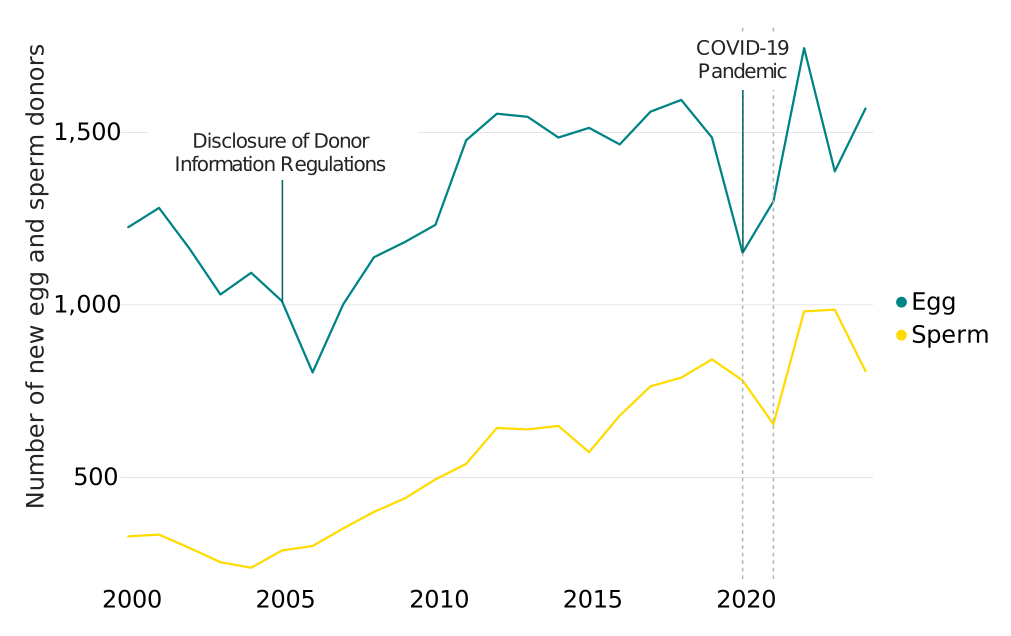
Note figure 5: New donor counts for 2020-21 are preliminary and have not been validated (grey dashed line). This data uses new egg and sperm donor registrations only. Donors that registered multiple times will only be counted in the year of their first registration.
Download the underlying data for Figure 5 as Excel Worksheet
6. Use of DI is declining, particularly among female same-sex couples and single patients
Opposite-sex couples accounted for 88% (47,000) of all IVF patients in 2024, remaining similar since 2014 (46,000). In comparison, female same-sex IVF patients have increased from around 1,000 in 2014 to 2,800 in 2024, and single IVF patients have more than tripled from 1,100 to 3,700.
Single patients accounted for the largest proportion of patients undergoing DI (51%), followed by female same-sex couples (42%) in 2024.
Previously, single patients and patients in female same-sex couples were more likely to have DI treatment first, before having IVF. However, in recent years an increasing number of these patients are opting for IVF with donor sperm, as their first treatment (Figure 6).
While IVF is one of the most invasive and expensive treatments per cycle, more single patients and female same-sex couples may use IVF over DI for several reasons, such as: higher birth rates per cycle; shorter time to pregnancy; lower multiple birth rates; lower overall donor sperm cost due to fewer cycles; and, the possibility of storing embryos for future treatments. In addition, the increased use of IVF among female same-sex couples in part relates to the use of reciprocal IVFVII. See Family formations in fertility treatment 2022 report.
Figure 6. Female same-sex couples and single patients increasingly having IVF first compared to DI
Number of IVF and DI patients by family type, 2014-2024
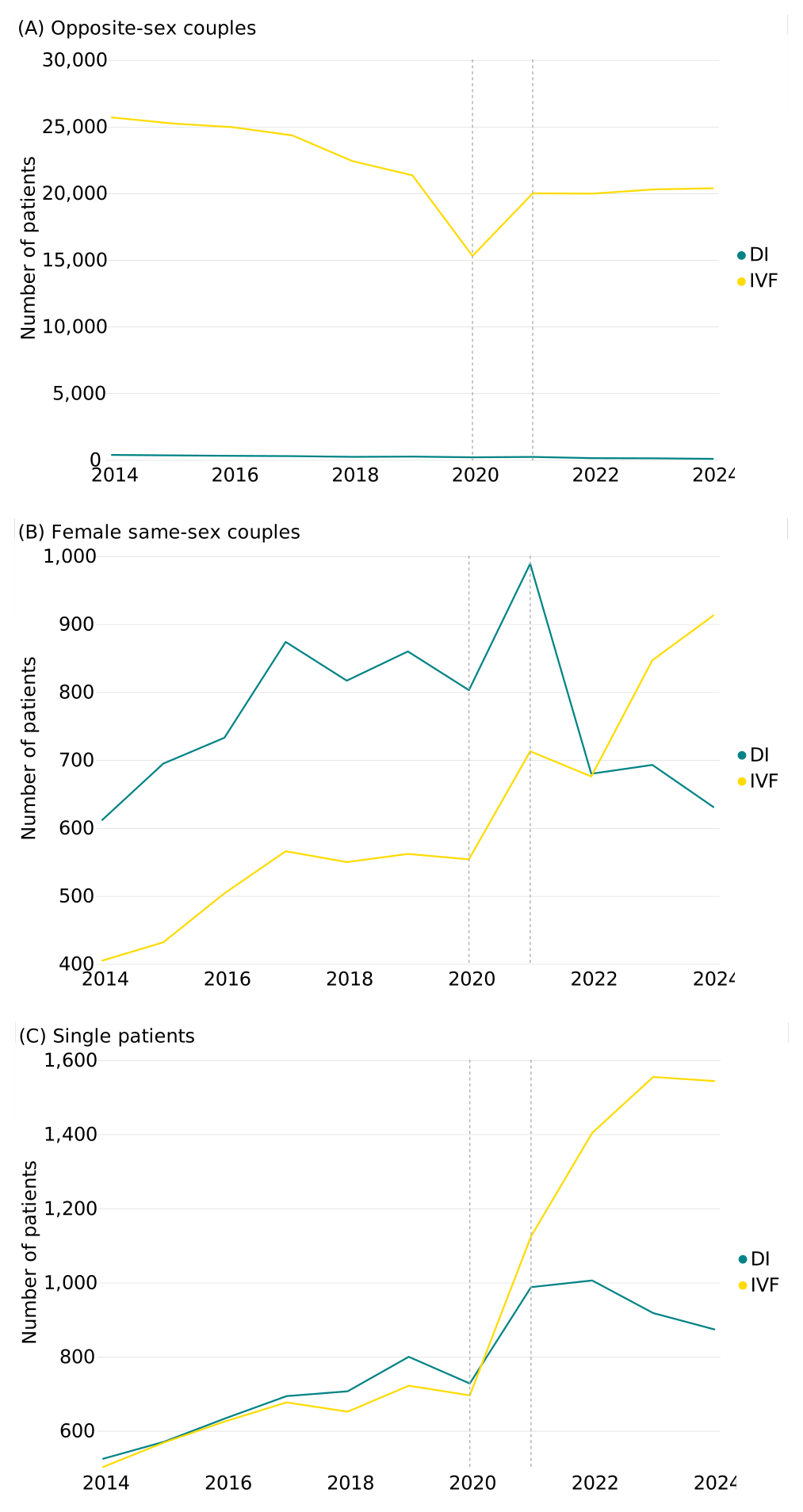
Note figure 6: Data is preliminary for 2020-21 (grey dashed line). Includes only IVF and DI cycles started with the intention of having immediate treatment, instead of storing eggs or embryos for future use.
Download the underlying data for Figure 6 as Excel Worksheet
7. NHS funded IVF cycles declined from 35% in 2019 to 28% in 2024
Overall, NHS-funded IVF cycles decreased from 35% of all IVF cycles in 2019 to 28% in 2024 in the UK, remaining similar across recent years (Figure 7). NHS funding for IVF varies considerably across the UK depending on national or local funding criteria.
In 2024, Scotland continued to have the highest proportion of NHS-funded IVF cycles at 54% compared to 50% in Northern Ireland, 35% in Wales and 25% in England. The proportion of NHS-funded cycles increased from 40% to 50% in Northern Ireland from 2019 to 2024, while decreasing most in Scotland (from 62% to 54%).
In Scotland, Wales and Northern Ireland, the level of NHS funding is set nationally. Funding decisions in England are made by Integrated Care Boards (ICBs). The National Institute for Clinical Excellence (NICE) provides recommended access criteria, which was updated earlier this year8-9. NHS-funded IVF cycles varied considerably across English regions ranging from 51% in the North East to 20% the South West and East Midlands in 2024.
Over the last five years, the proportion of NHS-funded IVF cycles across all English regions has decreased apart from in the East of England and Yorkshire and the Humber. The largest decreases were in the North West, South West and East Midlands.
Figure 7. NHS-funded IVF cycles decreased from 35% in 2019 to 28% in 2024
Proportion of IVF cycles funded by the NHS in UK nations and English regions, 2019 and 2024
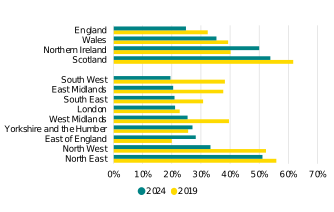
Note figure 7: This data includes IVF treatment cycles started with the intention of immediate treatment, instead of storing eggs or embryos for future use, using either fresh or frozen embryo transfer. Nation and region are based on clinic location, rather than patient’s residence.
Download the underlying data for Figure 7 as Excel Worksheet
About our data
This report provides an update on fertility treatment and outcomes in the UK and covers the period from 1991-2024 where data is available. Data for 1991 covers a partial year, starting in August 1991. The information that we publish is a snapshot of data provided to us by licensed clinics as required by the Human Fertilisation and Embryology Act 1990. Data from one clinic was excluded due to data reporting issues. Averages used are provided as mean values unless stated otherwise. Throughout this report, when referring to IVF, this includes both fresh and frozen IVF treatments as well as treatments using Intracytoplasmic sperm injection (ICSI) unless otherwise stated. The data used in this report is from the HFEA national register as of 06 May 2026. Results are published according to the year in which the cycle was started.
This report uses preliminary treatment and pregnancy data for 2020 and 2021, and preliminary birth outcome data for 2020-21 and 2024. This is due to outstanding data migration work following the launch of a new data submission system for licensed clinics, and the need to migrate our fertility treatment and outcomes data to a new database. This data migration has resulted in delays, which has prevented the validation of the 2020-21 treatment and pregnancy data and 2020 and 2021 birth outcome data. Data from these years is preliminary and cannot be compared to other reports. Data on birth outcomes from 2024 is currently preliminary due to the need for HFEA to receive outcome information from the treatments then validate and process the data received from all UK clinics. Data validation involves data quality checks that verify treatment, pregnancy and birth outcome data.
The HFEA dashboard shows HFEA data from 1991 onwards and is interactive, allowing users to investigate the topics in this report in more detail. Clinic level data can be found on Choose a Fertility Clinic.
For further information, please see our Quality and Methodology report.
About the HFEA
The HFEA is the UK’s independent regulator of fertility treatment and research using human embryos. Set up in 1990 by the Human Fertilisation and Embryology Act, the HFEA is responsible for licensing, monitoring, and inspecting fertility clinics and research centres – and taking enforcement action where necessary – to ensure everyone accessing fertility treatment receives high quality care.
The HFEA is an ‘arm’s length body’ of the Department of Health and Social Care, working independently from Government providing free, clear, and impartial information about fertility treatment, clinics and egg, sperm, and embryo donation.
The HFEA collects and verifies data on all treatments that take place in UK licensed clinics, which can support scientific developments and research and service planning and delivery.
The HFEA is funded by licence fees, IVF treatment fees and a small grant from UK central government. For more information, visit hfea.gov.uk.
Contact us regarding this publication
Media: press.office@hfea.gov.uk
Statistical: intelligenceteam@hfea.gov.uk
Accessibility: comms@hfea.gov.uk
Footnotes
- When referring to IVF in our publications this includes both fresh and frozen IVF treatments as well as treatments using ICSI unless otherwise stated.
- UK national birth data is calculated from the following statistical releases: Office for National Statistics10, National Records of Scotland11, and Northern Ireland Statistics and Research Agency12.
- Due to changes in clinical practice and improvements in data collection, birth rates are presented for the first time in our publications as a combined birth rate for both fresh and frozen embryo transfers using patient age at egg collection, rather than patient age at treatment. This change means that these numbers are not directly comparable to previous reports. This follows on from a public consultation on birth rate measures13 and aligns with wider changes to data reporting by the HFEA. See Quality and Methodology report.
- This includes any cycles started with the intention of donating eggs including those who also underwent treatment or stored eggs or embryos within the same cycle.
- The HFEA does not collect information on the number of sperm donation cycles on the national register.
- This includes only cycles started with the intention of donating eggs only. It does not include cycles in which a patient both underwent treatment or storage and donated eggs.
- Reciprocal IVF (also known as ‘shared motherhood’ or ‘shared parenthood’) is where eggs are collected from one partner in a same-sex female or other LGBTQIA+ couple and fertilised with donor sperm. The resulting embryo is then transferred into the other partner’s womb, who carries the pregnancy.
Notes on fertility treatment 2024: preliminary trends and figures
- Human Fertilisation and Embryology Authority (HFEA). Family formations in fertility treatment 2022. 2024.
- Human Fertilisation and Embryology Authority (HFEA). Ethnic diversity in fertility treatment 2021. 2023.
- Huttler, A. & Thornton, K. L. The complexity of addressing racial and ethnic disparities. Fertil Steril 2023.
- Katagiri, Y., Jwa, S. C., Kuwahara, A., Iwasa, T., Ono, M., Kato, K., Kishi, H., Kuwabara, Y., Taniguchi, F., Harada, M., Iwase, A., Sugino, N. Assisted Reproductive Technology in Japan: A Summary Report for 2023 by the Committee on Professional Scientific Conduct and Clinical Ethics of the Japan Society of Obstetrics and Gynecology. Reproductive Medicine and Biology. 2026.
- Kotevski, D. P., Newman, J. E,, Chaitarvornkit, A, Paul, R. C., Chambers, G. M. Assisted reproductive technology in Australia and New Zealand 2023. 2025.
- American Society for Reproductive Medicine (ASRM). For the First Time, More Than 100,000 Babies Born Through IVF in the U.S. in a Single Year. 2026.
- European IVF Monitoring Consortium (EIM) for the European Society of Human Reproduction and Embryology (ESHRE); De Neubourg, D., Smeenk J, Cuevas, I., Rezabek, K., Wingfield, M., Shilling, C., Wyns, C., Kupka, M.S., Baldani, D., Goossens, V. O-159 Assisted Reproductive Technology (ART) in Europe 2022: preliminary results generated from European registers by the ESHRE EIM consortium. Human Reproduction. 2025.
- National Institute for Clinical Excellence (NICE). Fertility problems: assessment and treatment. 2026.
- Department of Health & Social Care. NHS-funded in vitro fertilisation (IVF) in England. Updated 11 September 2025.
- Office for National Statistics (ONS). Births in England and Wales: birth registrations. Released 27 August 2025.
- National Records of Scotland (NRS). Vital Events Reference Tables 2024. Released 26 August 2025.
- Northern Ireland Statistics and Research Agency (NISRA). Registrar General Annual Report 2024 Births. Released 20 November 2025.
- Human Fertilisation and Embryology Authority (HFEA). Overview of HFEA public consultation on Choose a Fertility Clinic 2025. 2025.
| Publication date: |
|---|
