

The power of words: “Infertility can be an incredibly lonely experience, made worse by a lack of understanding from people”
In this blog, Lizzie, a member of our Patient Engagement Forum, speaks about her fertility journey and how words can be extremely powerful – in both good and bad ways.
“Someone I know did a couple of rounds of IVF that didn’t work, then split up with her husband and got pregnant naturally with her new partner, you never know!”
This was what someone said to me when I, heartbrokenly, shared that our third IVF cycle had failed. I had no idea what I was meant to take away from that comment (surely not any feeling of comfort or hope), or how to respond, so I quickly changed the subject.
This kind of experience is not unusual to those of us experiencing infertility, where what people say to us can often make us feel even more alone and misunderstood. Infertility can be an incredibly isolating and lonely experience, and this is often made worse by a lack of compassion and understanding from people in your life, as well as being on the receiving end of well-meaning, but unhelpful or hurtful, advice and platitudes. Although awareness is getting better, thanks to more people sharing their experiences more openly, and the work of fertility support organisations, many people still don’t know how to talk to, or support, those going through infertility.
Infertility brings a disenfranchised grief that’s largely hidden from those around us. It’s not the kind of grief that brings sympathy cards or flowers from friends and family to your door. It’s the silent heartbreak of a failed IVF cycle; the sadness at Christmas or on your birthday when another year has passed without you having the pregnancy or baby that you thought you would have by now; and watching friends easily have children and grow their family while you feel left behind and wonder when it will be your turn.
In the four years that my partner and I’ve been trying to conceive, I think I’ve heard all the “classic” unsolicited advice and comments, which is why I wanted to share some reflections on the unhelpful and hurtful things people often say to those of us going through infertility, what to avoid saying, and what people can say instead to support us.
Listen. Don’t try to “fix” things:
“Just relax and stop thinking about it!” “Have you tried [this] - my friend did that and got pregnant straight away!” “Just adopt.”
If someone is going through infertility and/or fertility treatment, chances are they’ve spent months or years researching ways to optimise their fertility, different treatment options and protocols, and possibly even alternative paths to parenthood. Giving advice on how to “fix” things is rarely helpful in this case and can invalidate what someone is going through.
Don’t give (potentially) false hope:
“Don’t give up, I know it will happen eventually! My friend/sister/colleague did several rounds of IVF then conceived naturally when they stopped trying.”
While this may seem like a positive story to share with someone, no-one can predict how anyone’s fertility journey will end (whether with or without a baby) and the decision of whether to “give up” on fertility treatments or stop trying is a hugely personal one. “Don’t give up” can also imply that someone has not tried ‘hard enough’ or could have had a successful outcome if they had only ‘tried harder’.
Don’t dismiss or minimise someone’s pain:
“At least you can try another embryo transfer or IVF cycle.” “At least you know you can get pregnant.” “At least the miscarriage was early.”
By trying to put a ‘positive’ spin or ‘silver lining’ on someone’s experience and not acknowledging what has happened to them, you risk dismissing their pain and invalidating how they’re feeling, which can make them feel even more alone and misunderstood.
Avoid clichés:
“Maybe it’s just not meant to be.” “Everything happens for a reason.”
This can feel incredibly hurtful when you’re longing to have your own child and have seen it come so easily to so many other people (even those who weren’t even trying to conceive).
Don’t ignore the hardships of fertility treatment:
“You’re doing IVF - that’s so exciting!”
While the thought of finally having a baby after years of infertility can feel exciting, starting or continuing fertility treatments is often an incredibly daunting, anxious and stressful time.
Don’t make comparisons to a life with children:
“You can borrow my kids!” “At least you can have a lie in/get a good night’s sleep or go on holiday.”
Many people experiencing infertility would happily sacrifice some quality sleep for a chance at our own baby, and have, likely, had to skip holidays to put money towards fertility treatment instead.
Something you should never ask, regardless of whether or not you know someone’s fertility story or individual circumstances, is “When are you going to have a baby?” or “Why haven’t you got any children?” You never know what someone’s going through and these questions can be incredibly painful for someone experiencing infertility to answer.
Instead, acknowledge and validate the pain and grief that someone experiencing infertility is going through. Often just being there and listening, without judgement, is such a powerful thing to do. Sending small, supportive messages on days that someone has an appointment like a scan, egg collection or embryo transfer, such as “Thinking of you today” or “Hope everything goes well” or even a simple heart emoji, can go a long way.
Some other supportive things that you can say to someone experiencing infertility include:
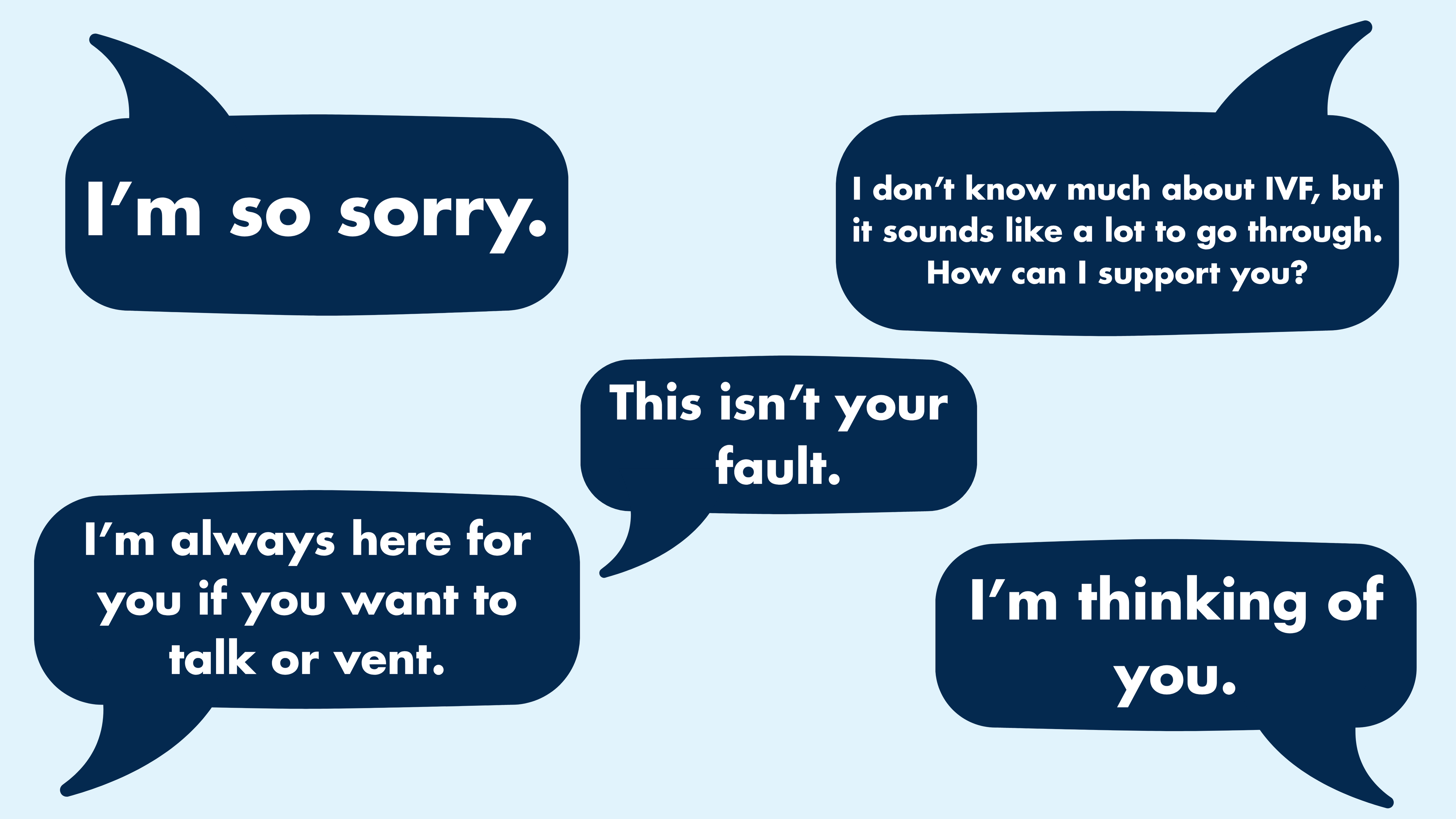
You should also take the time to understand and respect how much someone wants to share about what they’re going through. Everyone is different - some people will want to keep their experience private, while others will want to talk about it.
I hope that, in time, we will all learn to be able to communicate with more care and compassion about infertility and to those experiencing it and help to make such a difficult and lonely experience feel a little more supported.
About the author:
Lizzie and her partner have been trying to conceive for four years. They have undergone four unsuccessful IVF cycles at two different clinics and are currently exploring further treatment options.
| Publication date: |
|---|
